➜ Solar
SOLAR SYSTEM DESIGN AND SETUP IN
Below roughly 400 watts a PWM controller is enough; above it, MPPT harvests noticeably more. Battery Power designs and specifies complete solar systems in , and across Lake and Sumter Counties, sizing panels, controllers, inverters, battery banks, fusing and wiring around the appliances you actually plan to run. Licensed and insured, free consultation, site-specific layout guidance, ongoing troubleshooting support.
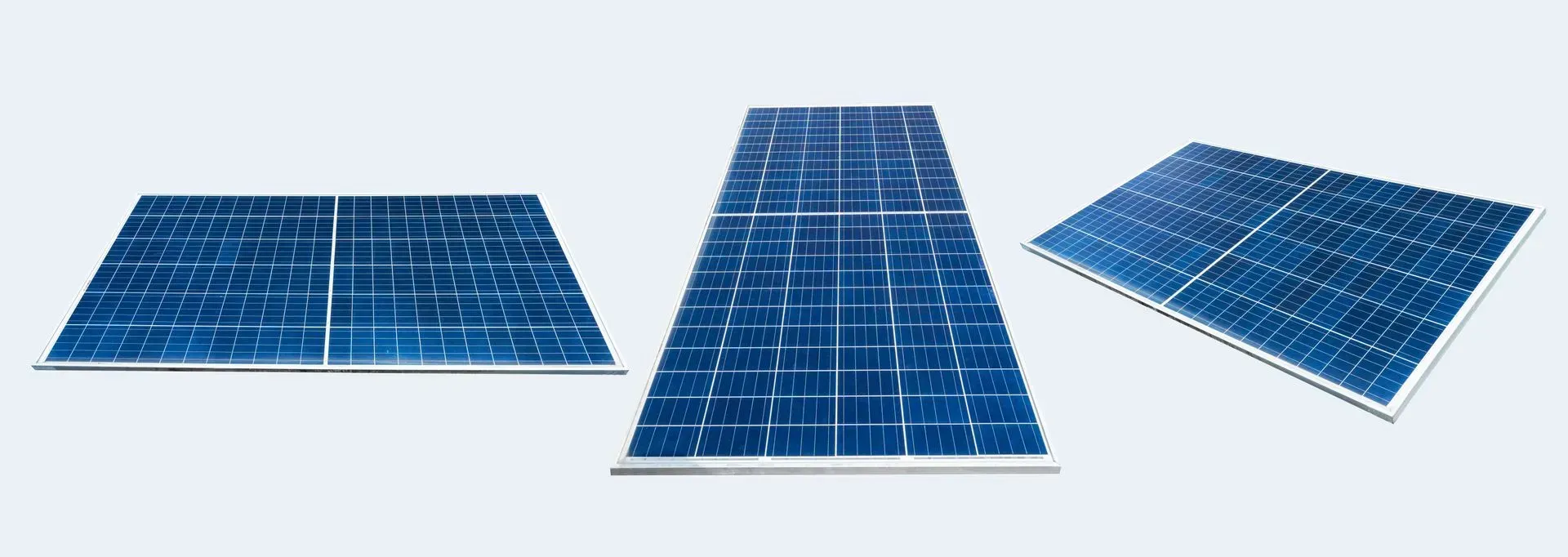
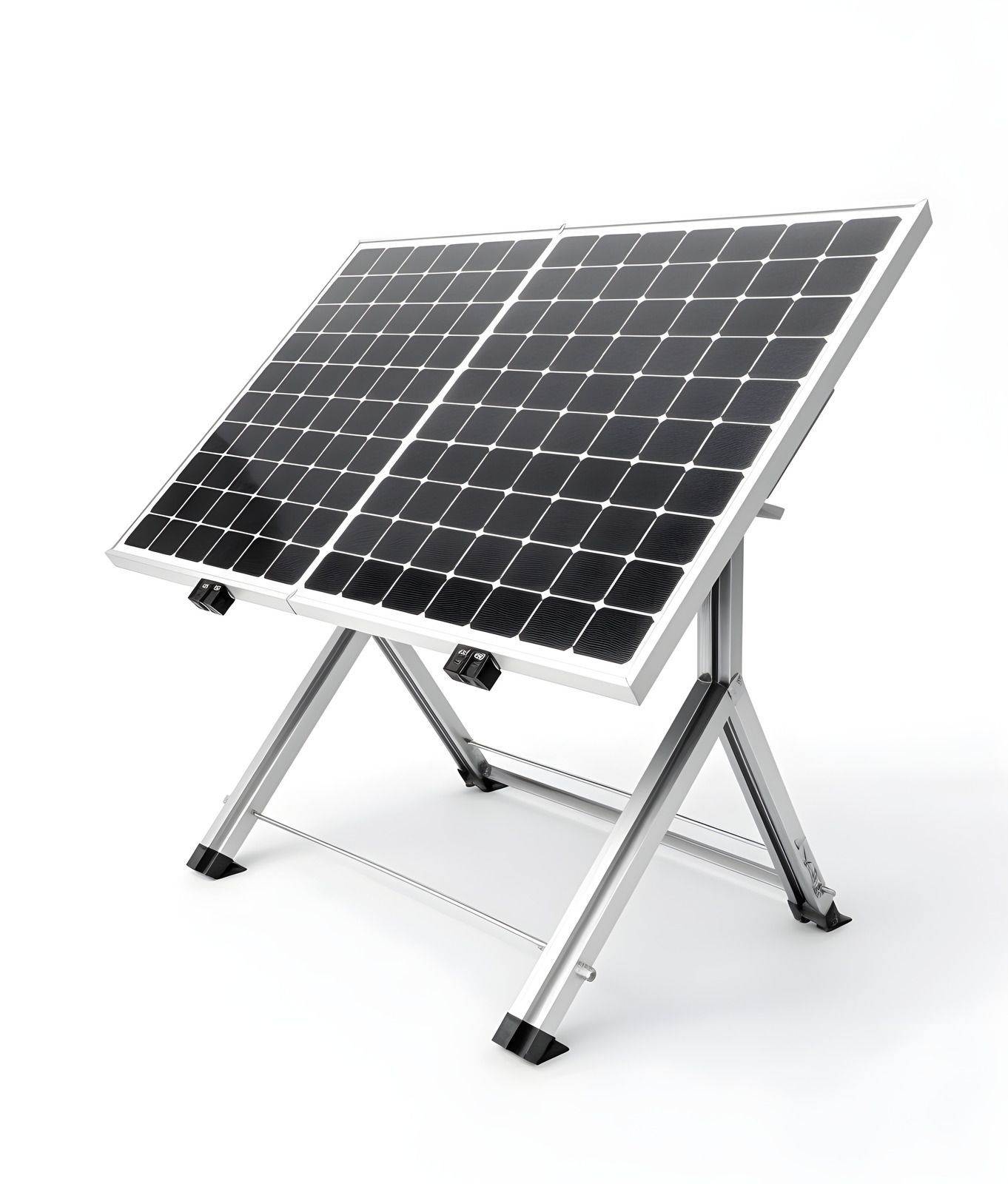
A SOLAR SYSTEM IS FIVE PARTS THAT MUST AGREE.
Panels, controller, battery bank, inverter and wiring are not five separate purchases. They are one system, and the weakest decision in it sets the ceiling for everything else. An oversized array feeding an undersized controller wastes most of what it collects. A generous battery bank sitting behind a small inverter still cannot start a well pump.
Most failed solar projects we see were never designed, only assembled. Someone bought a kit, added panels later, and the numbers stopped agreeing with each other somewhere along the way.
- Load assessment before any hardware is recommended
- Controller, inverter and bank sized as one system
- Wiring, fusing and safety layout planned in writing
- Portable and hybrid options compared honestly against a full build
➜ SOLAR SYSTEM DESIGN AND SETUP
WE START WITH YOUR APPLIANCE LIST, NOT A PANEL COUNT.
Tell us what has to keep running and for how long, and the rest falls out of that arithmetic. A refrigerator, a well pump, a window unit and a CPAP machine each behave differently on battery power, and their surge draw matters as much as their running watts. From that list we work backwards to inverter capacity, usable storage, array size, controller type and cable gauge, then hand you a specification you can build against.
LEESBURG SUN IS GENEROUS AND UNFORGIVING AT ONCE.
Panels here want roughly 26 degrees of tilt across the year, flattening to about 11 degrees through summer and steepening to about 41 in winter, always facing true south. That much sun is a gift. The heat that comes with it is not, because high panel temperatures reduce output and hot garages shorten battery life. Systems designed for a cooler state quietly underperform in this one.
FUSING IS THE PART EVERYONE SKIPS.
Ask most people about their solar setup and you will hear panel wattage. Ask about overcurrent protection on the positive leads and the room goes quiet. In years of building and troubleshooting battery systems we have traced more faults to unprotected conductors, undersized cable and mixed-up series and parallel runs than to any panel or controller. Protection is cheap at the design stage and expensive afterwards. What is guarding your bank right now?
WHAT A PROPERLY DESIGNED SYSTEM DELIVERS
POWER THAT MATCHES YOUR REAL LOAD
The lights, the fridge and the pump keep running because the system was sized around them, not around a package deal that happened to be on offer the week you bought it.
NO HARVEST LEFT ON THE ROOF
A controller matched to your array voltage converts what the panels actually produce instead of clipping it away. Over a Florida year that difference compounds into real usable energy.
WIRING YOU DO NOT WORRY ABOUT
Correctly gauged cable, fused positive leads and clean terminations keep heat and fault current under control. That is the part of the system nobody sees and everybody depends on.
ROOM TO GROW LATER
Planning the controller and bank with headroom means adding panels next year is an afternoon, not a rebuild. Expansion should never mean replacing everything you already bought.
STORAGE THAT SURVIVES OUR SUMMERS
Chemistry chosen for heat, ventilation planned into the location, and charge settings matched to the bank all decide whether storage lasts years or seasons in a Central Florida garage.
ONE PERSON WHO KNOWS THE WHOLE SYSTEM
When something misbehaves, you call the people who specified it rather than three vendors pointing at each other. Troubleshooting is far quicker when the design is already on file.
➜ WHAT WE DESIGN
OUR SOLAR SYSTEM WORK
Six areas cover everything from a single panel keeping an RV battery topped up to an off-grid workshop with a full inverter and bank. Bring your energy goals, appliance list or building layout.
SIZING
Load Assessment And System Sizing
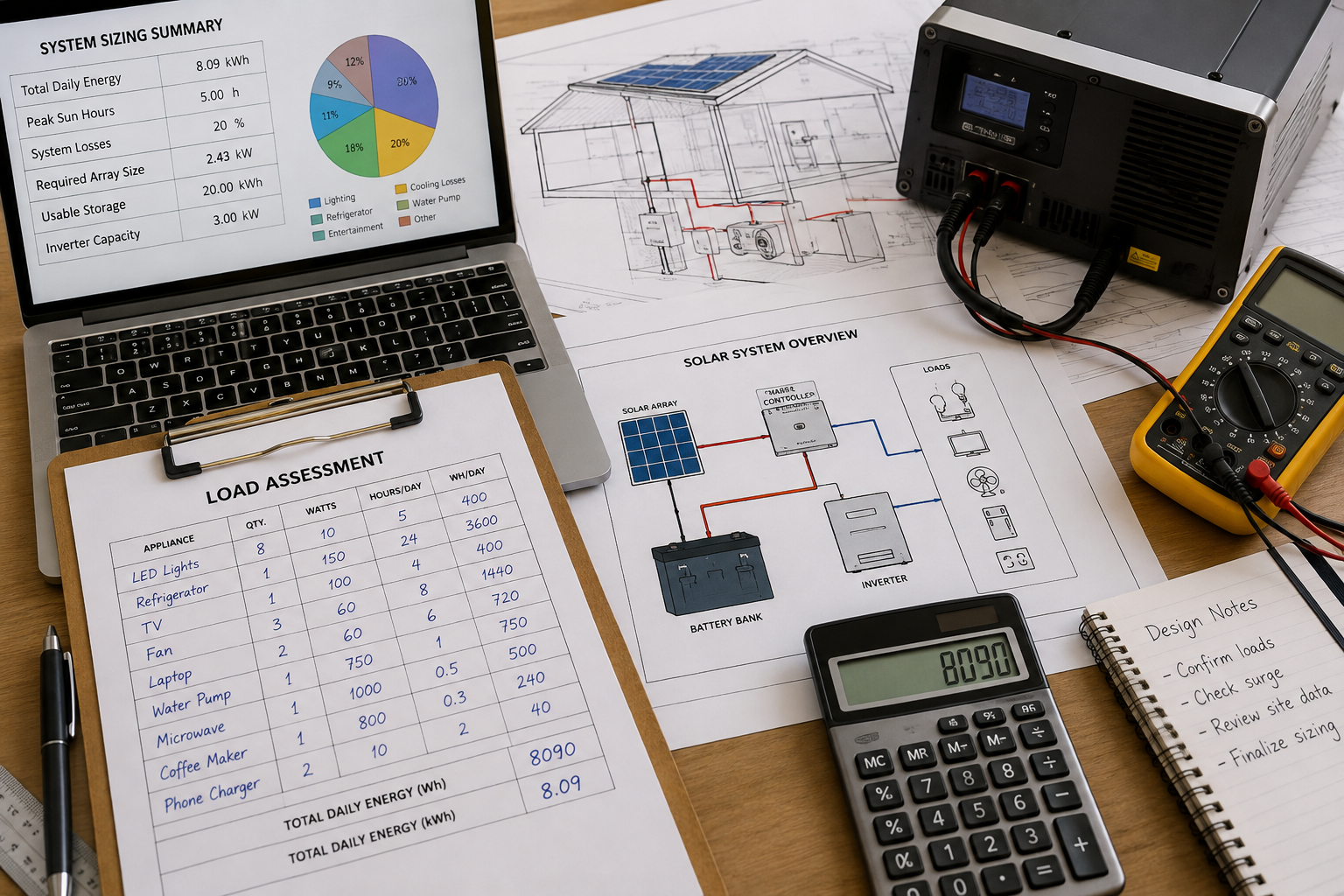
Everything begins with watt-hours. We total running loads, surge loads and daily runtime, then translate that into array wattage, usable storage and inverter capacity so the finished system carries the work you expect from it.
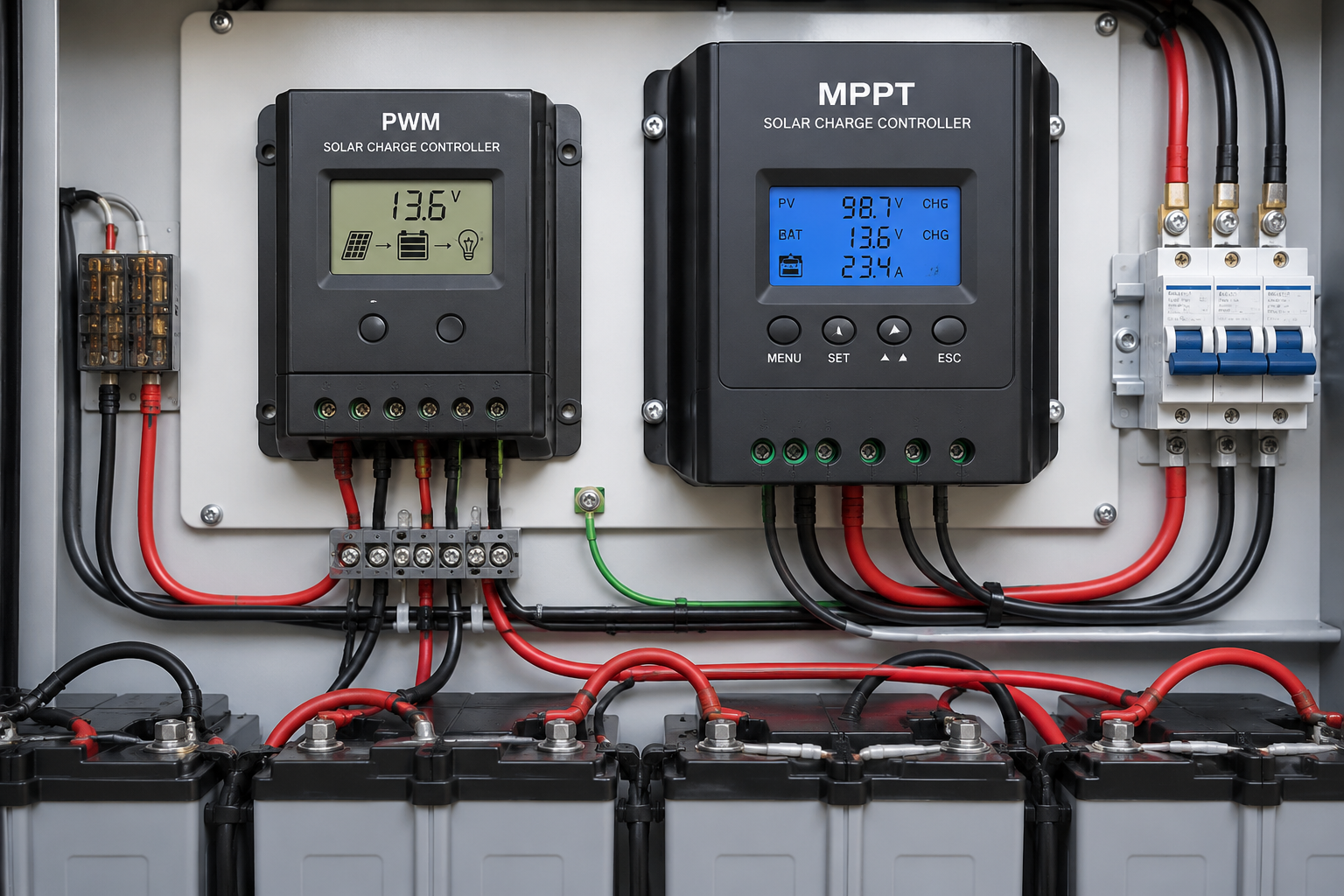
CONTROLLERS
Controller Selection And Configuration
PWM suits arrays whose voltage sits close to the bank, typically under about 400 watts. MPPT earns its price above that, or wherever panel voltage runs well above battery voltage. We set the parameters to your chemistry.
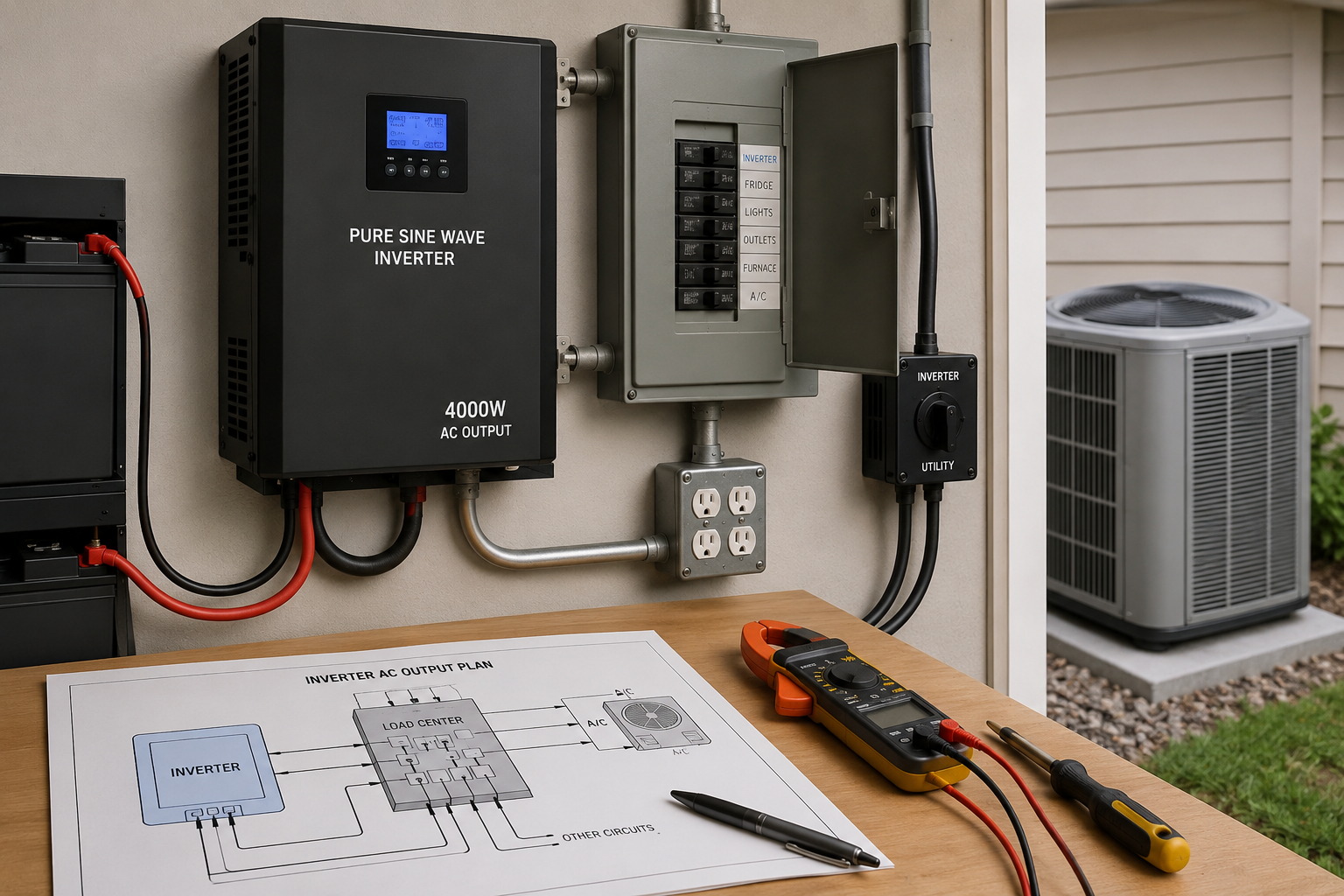
INVERTERS
Inverter And AC Output Planning
Converting stored direct current into 120 volt household power sounds simple until a compressor tries to start. We size for surge as well as continuous draw, and confirm which circuits the inverter is expected to carry.
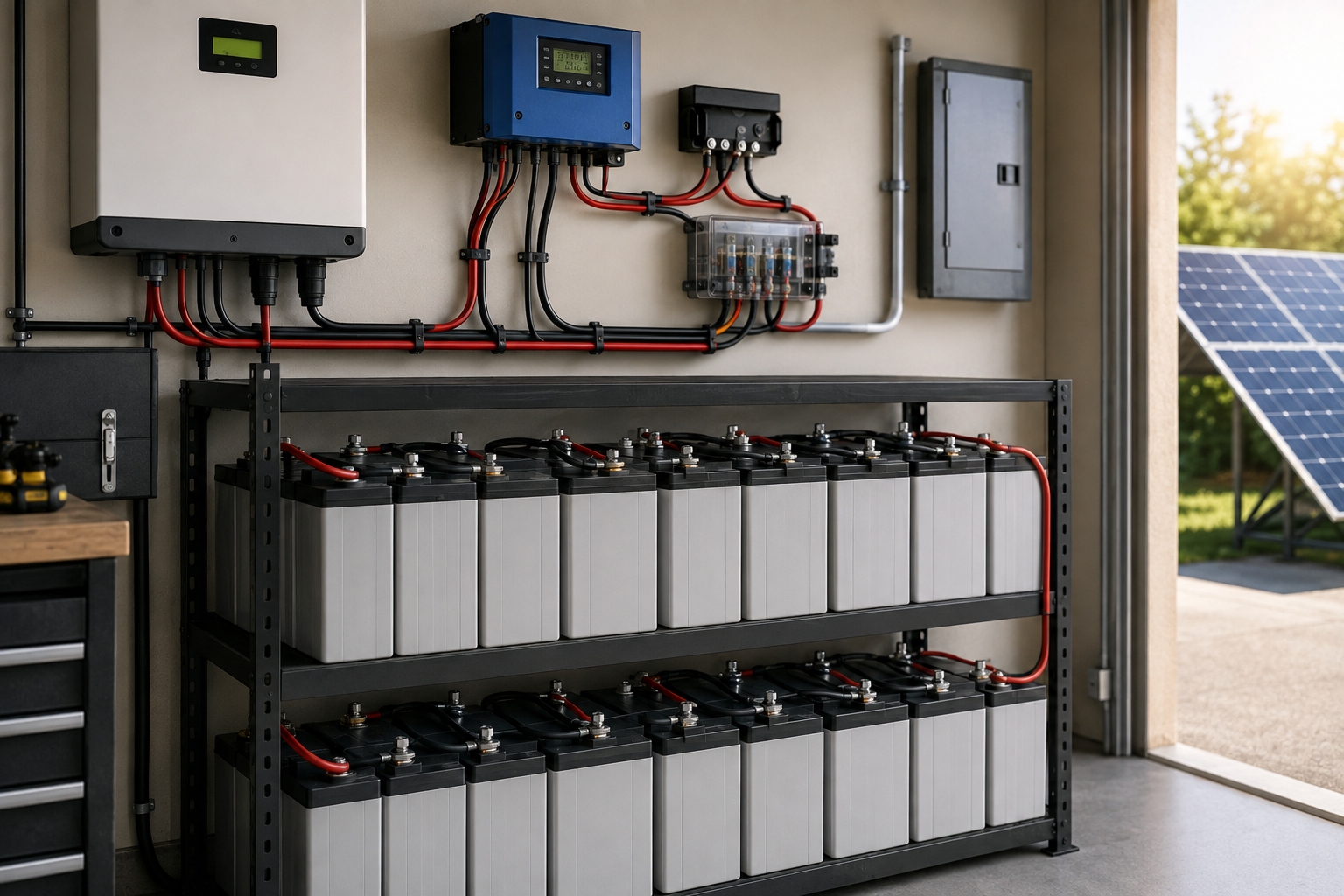
STORAGE
Battery Bank Design
Usable capacity is not nameplate capacity. Lead-acid gives up about half before damage begins while lithium delivers nearly all of it, so the chemistry decides how many amp-hours your daily reserve really needs.
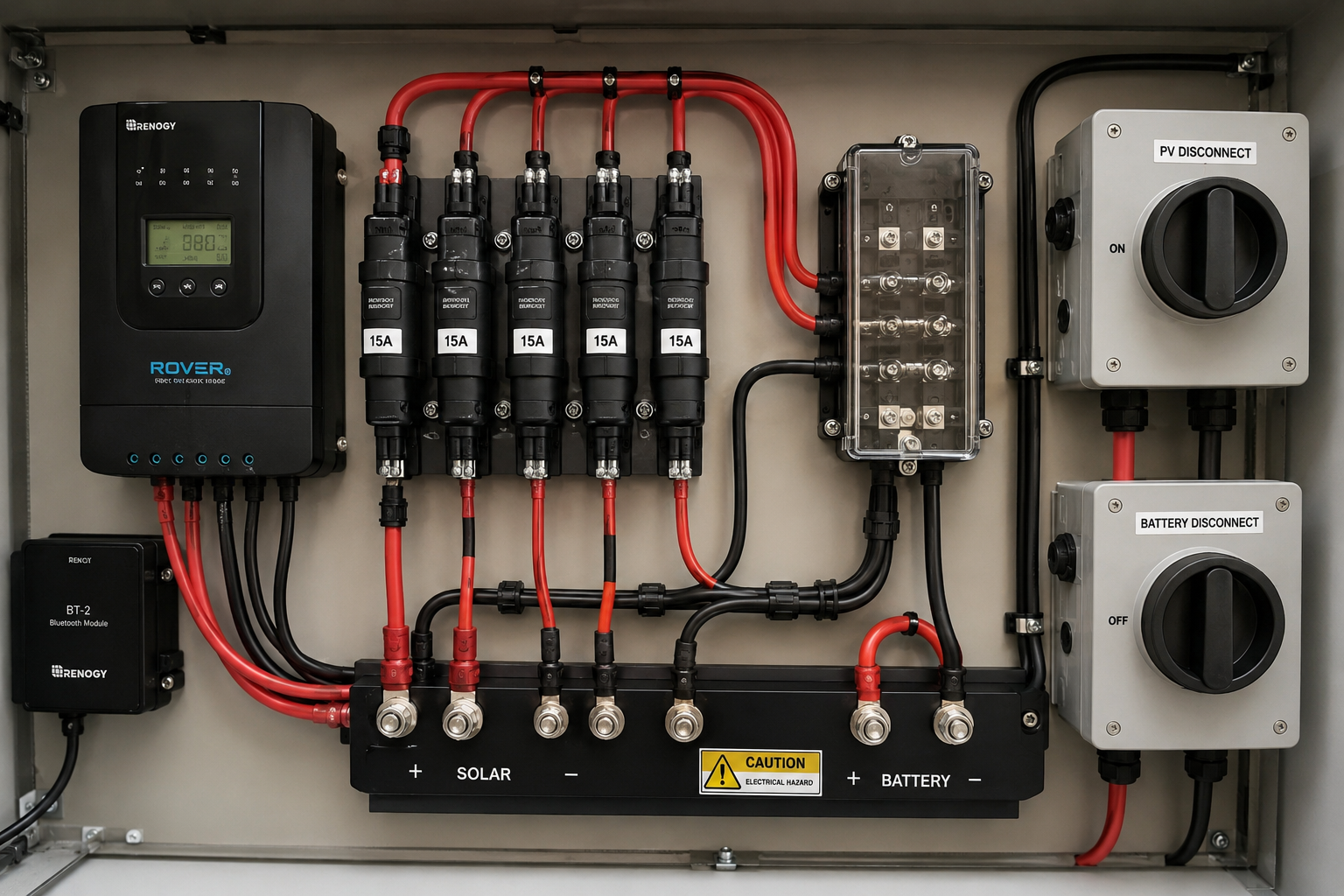
WIRING
Wiring, Fusing And Safety Layout
Series raises voltage, parallel raises current, and series-parallel scales both. We specify the arrangement, cable gauge, connectors and fusing on every positive lead so faults stop at a fuse rather than a conductor.
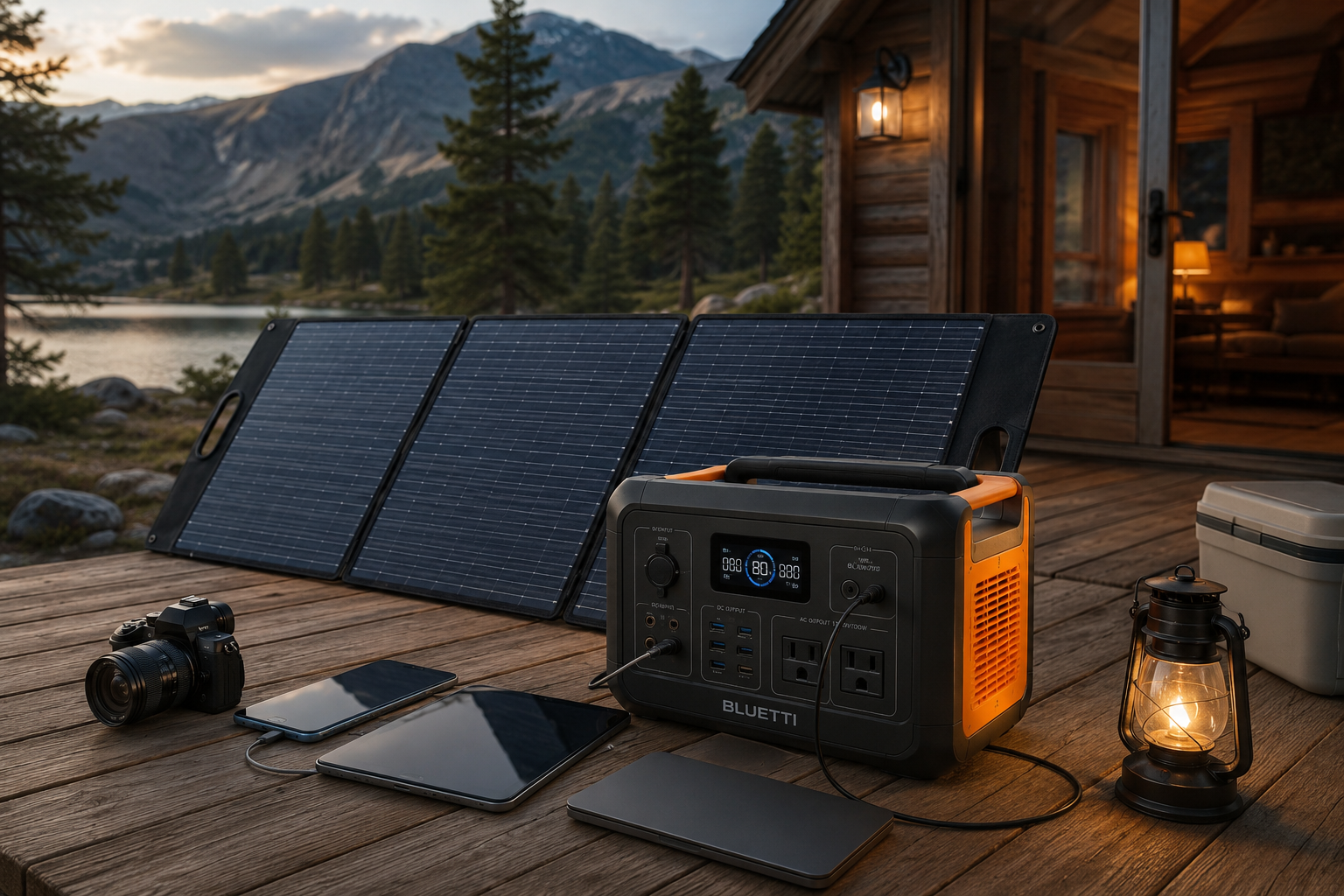
PLUG AND PLAY
Portable And Hybrid Station Setups
Not every goal justifies a fixed install. A station with an integrated controller and inverter covers outages, camping and job sites with minimal wiring, and it can sit alongside a permanent system later.
★★★★★
Excellent Service and Support
Exemplary service! Amicable, punctual, overall went well.
Chris K.
➜ THE WORD ON OUR WORK
WHAT OUR CLIENTS SAY.
Solar customers arrive with a spreadsheet and a lot of conflicting advice from the internet. What they tell us afterwards is that somebody finally explained the arithmetic rather than quoting a package, and that the system does what the plan said it would.
➜ Common Questions
FREQUENTLY ASKED QUESTIONS.
These come up at almost every solar consultation. If your situation is different, send your appliance list and roughly how long each item must run through our contact page.
How do I size a solar system for what I actually run?
Add the watt-hours each appliance consumes in a day, then add roughly 20% for losses in the controller, inverter and cabling. That daily figure drives array wattage and storage together, not separately.
What size inverter do I need for a 400 watt array?
Size the inverter to your loads rather than the array. Continuous draw sets the baseline, but a compressor or pump can pull several times its running watts for a moment, and the inverter has to survive that surge.
How big should my battery bank be?
Work from the daily watt-hours you calculated, multiply by the days of autonomy you want, then adjust for usable depth of discharge. Battery Power sizes banks like this every week in Leesburg, Florida, before quoting anything.
Do I need a fuse between the panels and the charge controller?
Yes, on the positive lead, and again between the bank and the inverter. Fusing is what stops a short in a cable from becoming a fire, and it costs very little to install correctly.
Can I add more panels to the system later?
Only if the controller and wiring were specified with headroom. Adding panels raises voltage or current depending on the arrangement, and a controller already at its limit becomes the thing that has to be replaced.
What can a 400 watt solar system actually run?
Realistically, lighting, phones, a laptop, a fan and a small efficient refrigerator, with storage carrying the overnight load. Air conditioning, electric water heating and well pumps need considerably more array and much more inverter.
Do I need a permit for solar in Florida?
Permanent roof-mounted and grid-tied systems require permits and a licensed solar contractor. Portable stations, RV setups and small off-grid builds generally do not, though local rules vary, so confirm with your county before starting.
Why plan a system with you instead of buying a kit online?
Because a kit is sized for an average that may look nothing like your house. Battery Power in Leesburg, Florida, designs around your appliance list, then supports the system afterwards when something needs troubleshooting.
➜ HOW WE WORK
FROM AN APPLIANCE LIST TO A LIVE SYSTEM, HERE IS HOW.
STEP 01
Bring Us Your Energy Goals
Come in with an appliance list, a power bill or simply a building layout and a sense of what must stay on. We ask what runs daily, what runs occasionally, and what absolutely cannot go dark during an outage.
STEP 02
Map The Site And The Sun
Roof pitch, orientation, shading from oak canopy and available mounting area all shape what is realistic. We work to true south and the tilt angles this latitude rewards, and we say plainly when a site limits output.
STEP 03
Specify Panels And Controller
Array wattage, panel voltage and controller type get decided together, because they constrain each other. That is where the PWM and MPPT choice is settled, along with the series or parallel arrangement feeding it.
STEP 04
Size The Bank And The Inverter
Storage chemistry, usable capacity and the days of autonomy you want come next, followed by continuous and surge inverter ratings. You see the arithmetic behind each number rather than a single figure on a quote.
STEP 05
Plan The Wiring And Protection
Cable gauge, run lengths, connectors, disconnects and fusing on every positive lead are drawn up before anything is bought. Getting this on paper early is what keeps the finished system safe and serviceable.
STEP 06
Commission, Test And Support
We verify charging voltages, controller settings and inverter behavior under a real load, then leave you with every setting written down. When you expand later or something misbehaves, the original design is still here on file.
➜ GET YOUR FREE SOLAR CONSULTATION
BRING US YOUR APPLIANCE LIST AND THE FIRST DESIGN IS FREE.
Walk in with a power bill, a parts list or a rough plan, and leave with a system that adds up. We size, specify and explain before you spend anything. Start it through our contact page.
WHAT YOUR FREE CONSULTATION COVERS:
- Daily watt-hour load worked out with you
- Array wattage and panel arrangement recommended
- PWM or MPPT controller choice explained
- Battery bank chemistry and usable capacity sized
- Inverter continuous and surge rating matched
- Wiring, fusing and disconnect layout outlined